Concept Testing & NPD
Screen new product ideas with real target consumers before you invest. In-depth AI-moderated interviews show which concepts to choose, improve or drop, and why.








Sound familiar?
You have an innovation pipeline but no quick way to test ideas at each stage.
You need to know which ideas are worth more budget.
A new product or service is designed and you need a go/no-go.
Where Motives comes in
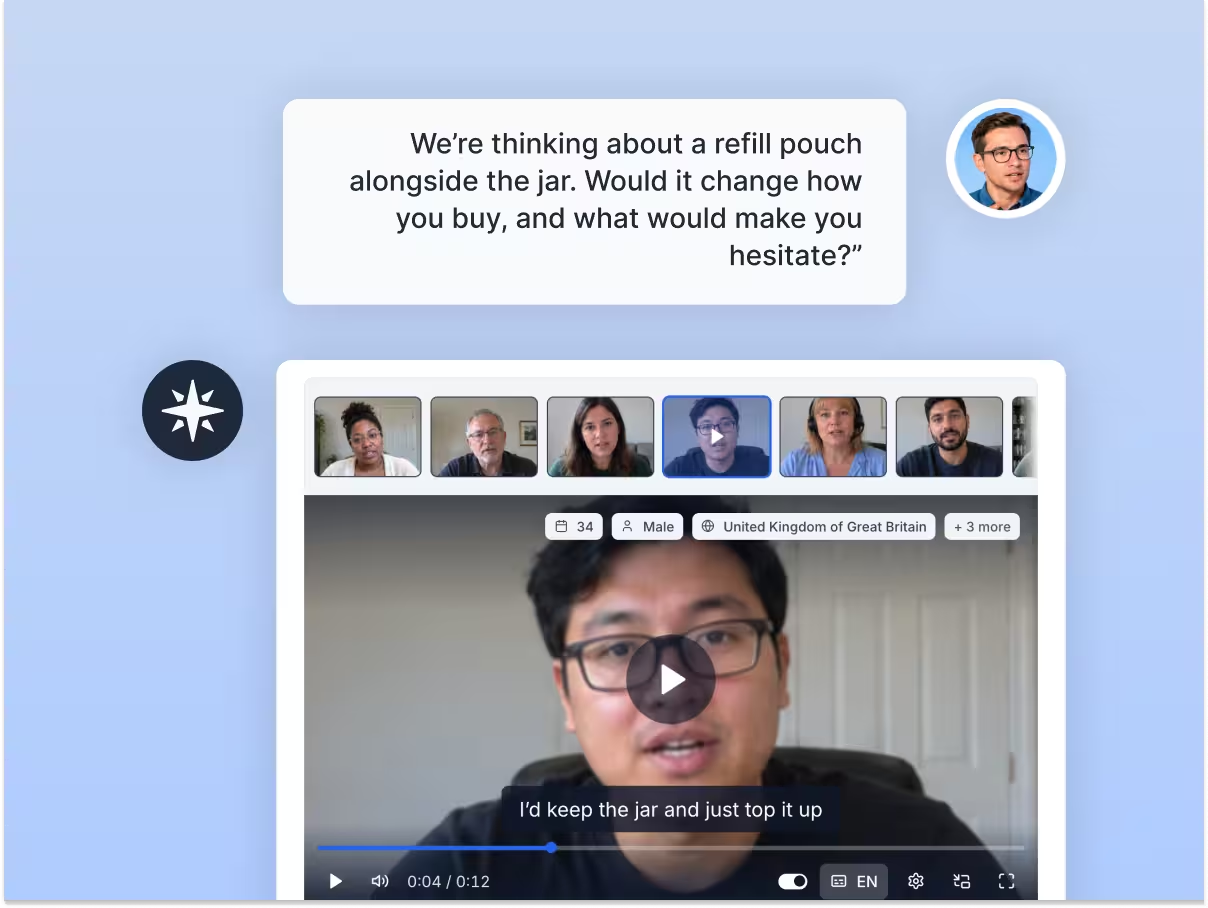
Spot weak ideas before they take budget
Put early ideas in front of real target consumers before committing R&D or production spend.
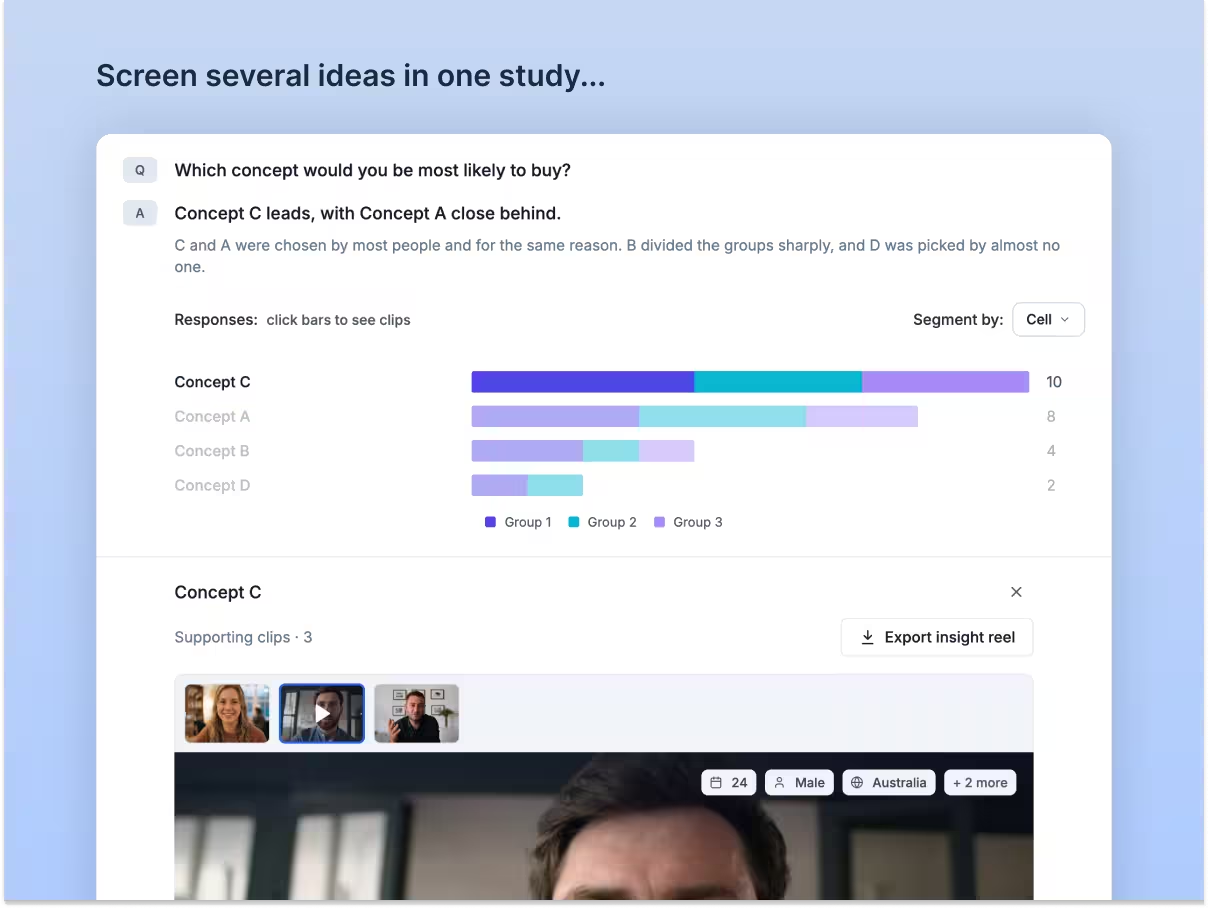
Screen several ideas in one study
Each person reacts to a few concepts, and different groups can see different ones.
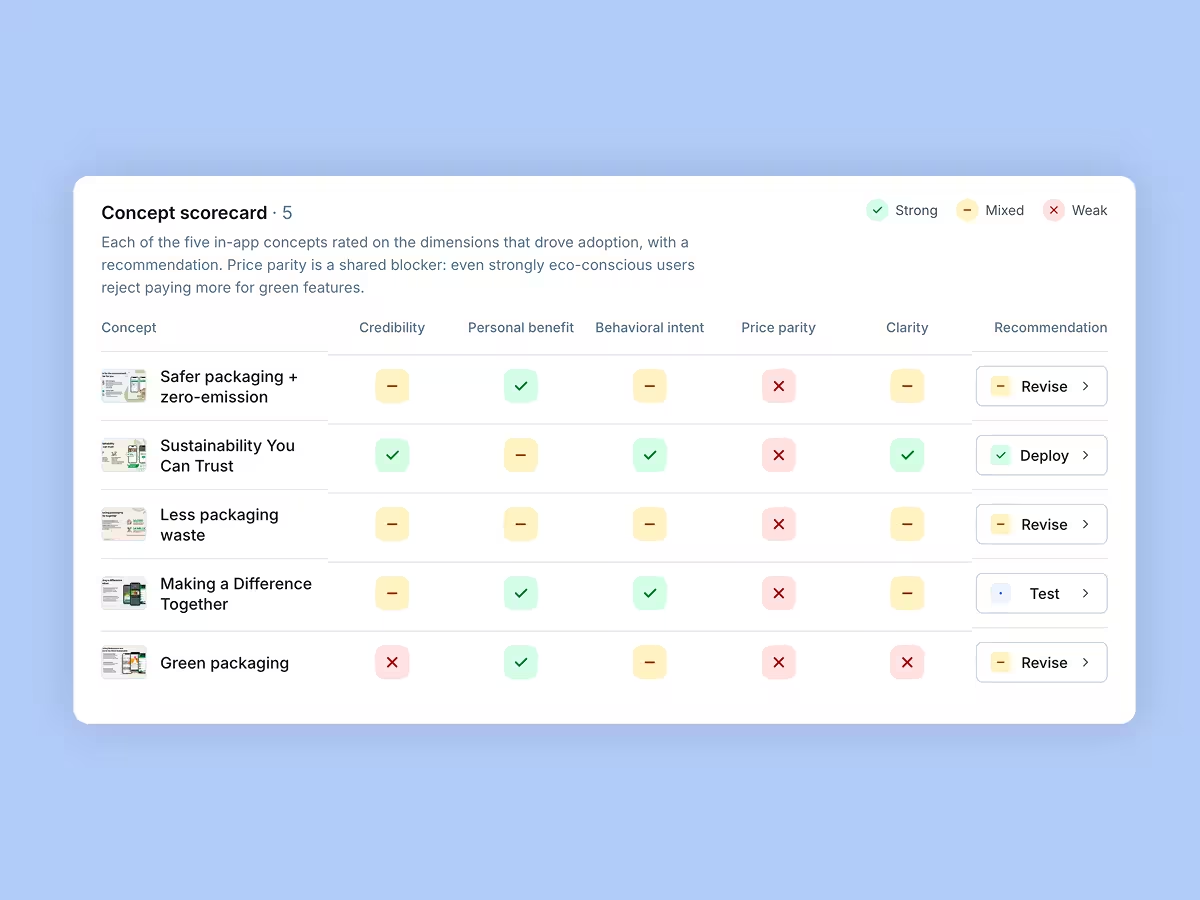
Get a clear go, no-go or fix
Know whether to choose, improve or approve each idea, and what to change.
Questions we can help answer
A Concept Testing & NPD study answers questions like these in your customers’ own words, linking back to the moment they said it on video.




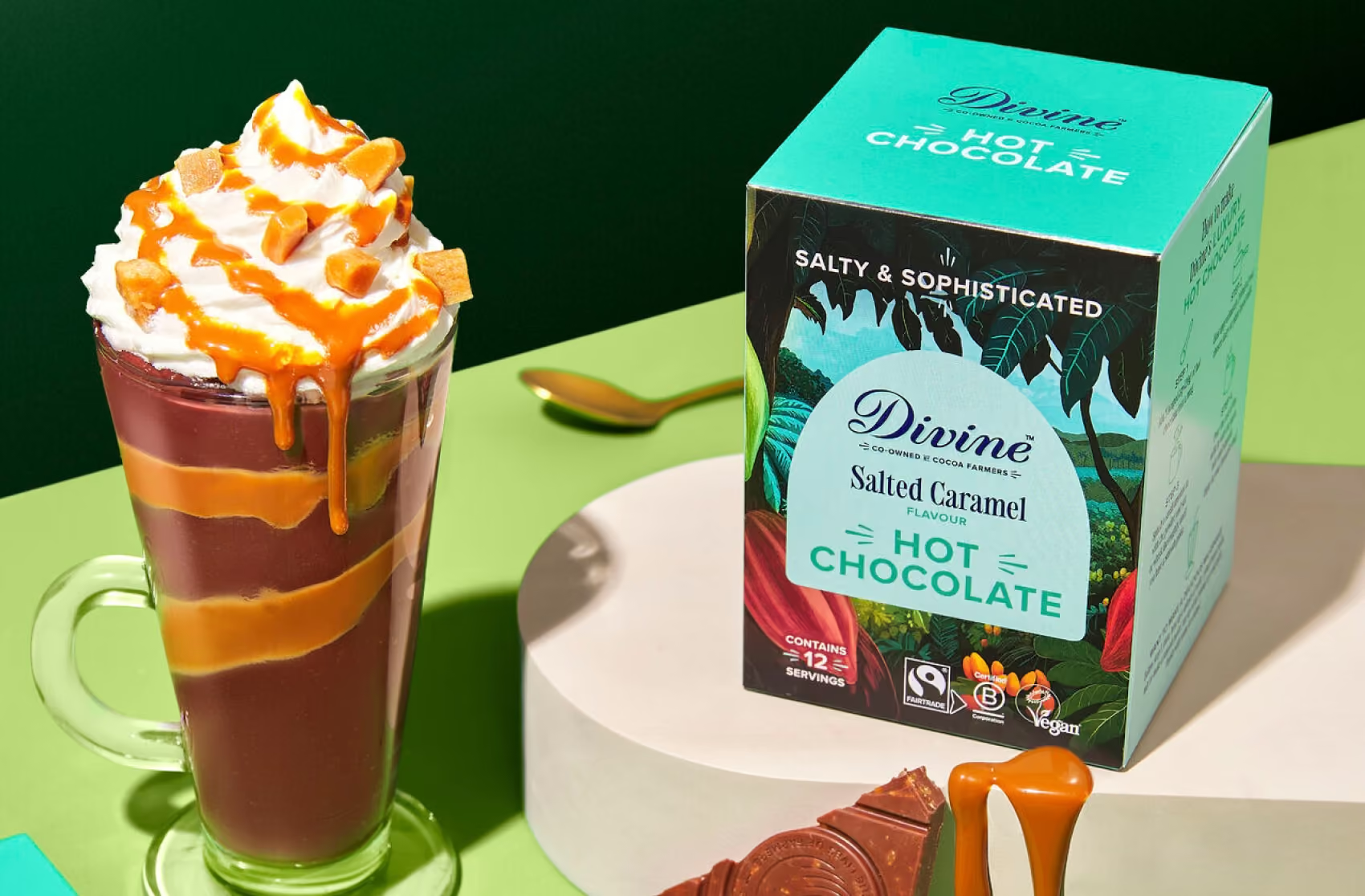
How Divine Chocolate used Motives to validate their premium hot chocolate strategy
Divine Chocolate used Motives to validate their premium hot chocolate relaunch in days. Their Marketing Director designed the study with the help of Motives AI Research Assistant, recruiting 20 shoppers who provided video testimonials on pricing, packaging, and flavors. The research convinced retailers on pricing, refined packaging design based on consumer feedback, and directed seasonal flavor decisions. This single study replaced what would have required multiple traditional research projects.
Read the case study →How it works
Brief
Tell us what you need to decide. Motives’ AI research assistant turns it into a discussion guide you can fine-tune.
Recruit
We find the right people from vetted panels in 30+ markets, or your own customer list. Every participant is video-verified.
Interview
The AI moderator interviews each participant on video, in their own language, probing on what matters.
Explore
Findings within 24 hours, each linked to the video moment behind it. Ask the Researcher follow-up questions anytime.
Choose Motives for Concept Testing & NPD when…

The decision won’t wait
Make a confident call in days, or iterate several times before you commit.

Groups need comparing
Cover every segment that matters at full interview length.

There’s a lot to test
Test more materials across more cells than a focus group allows.
Good to know
Screening to compare several early ideas, a go/no-go on one developed concept, or repeat rounds as the idea evolves. Clients also use it to decide which concepts go into quant testing, or to narrow the stimulus down before focus groups.
Concept boards, images, videos, web pages and PDFs, shared as links. Participants can also show physical products on camera.
Several. Each person can react to a few concepts, and different groups can see different ones, so you can screen a pipeline in one study.
Yes. Add previous research to the brief and the AI uses it as context, for example to explain why one concept scored higher.
Most studies use 20–30 people, with at least 10 per group you want to compare.
A study for every decision.



Not sure which study type fits your question?
Tell us what you need to decide and we’ll suggest a study design.