Brand Perception & Positioning
Find out how people see your brand next to competitors, and why. Video interviews show what drives those views, and how they differ across groups and markets.








Sound familiar?
You know your competitors, but not how consumers see you next to them.
You’re planning to change part of the brand and want to know if it will land.
There are beliefs about the brand that nobody has tested.
Where Motives comes in
See where you stand against competitors
Map strengths, weak spots and your position in the category.
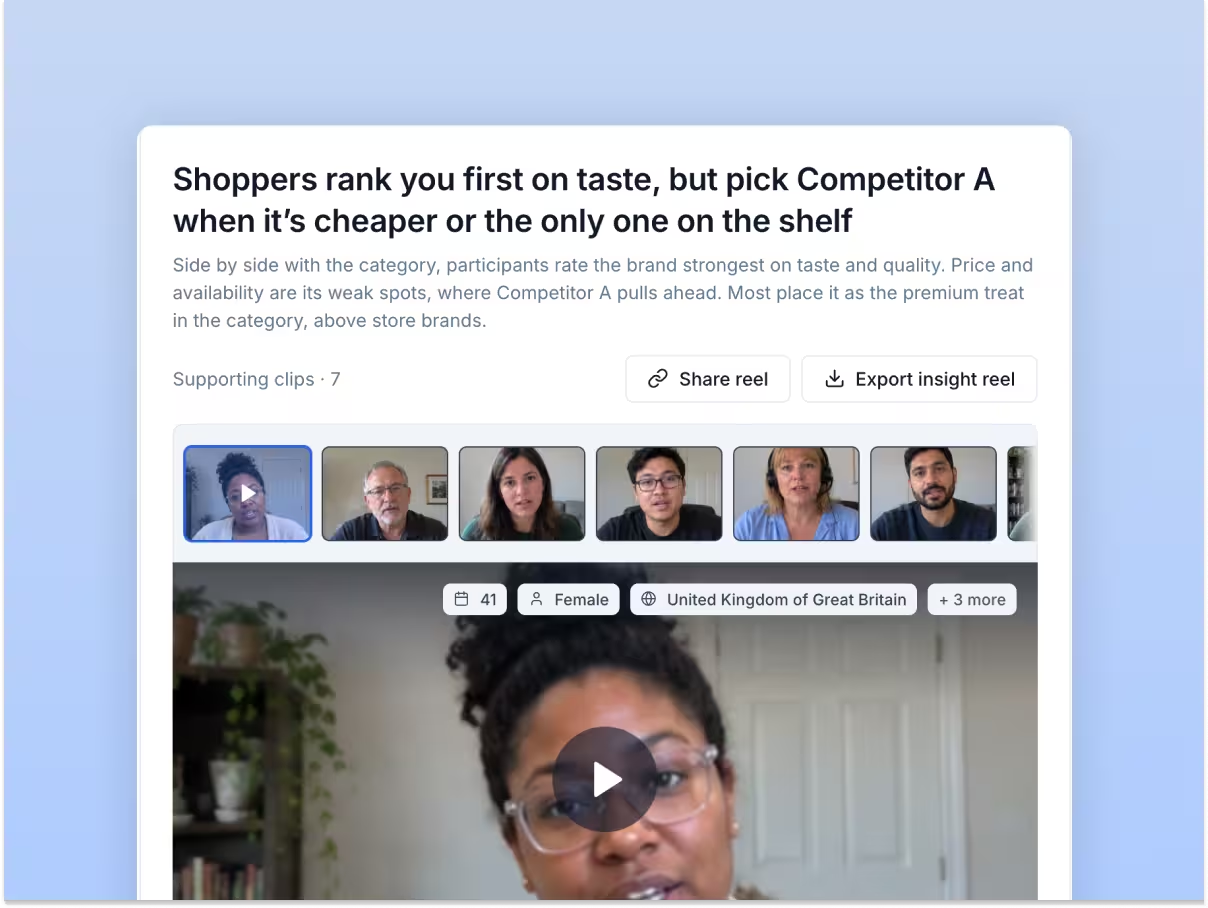
Find what’s driving brand perception
Hear, in their own words, why people see the brand the way they do.
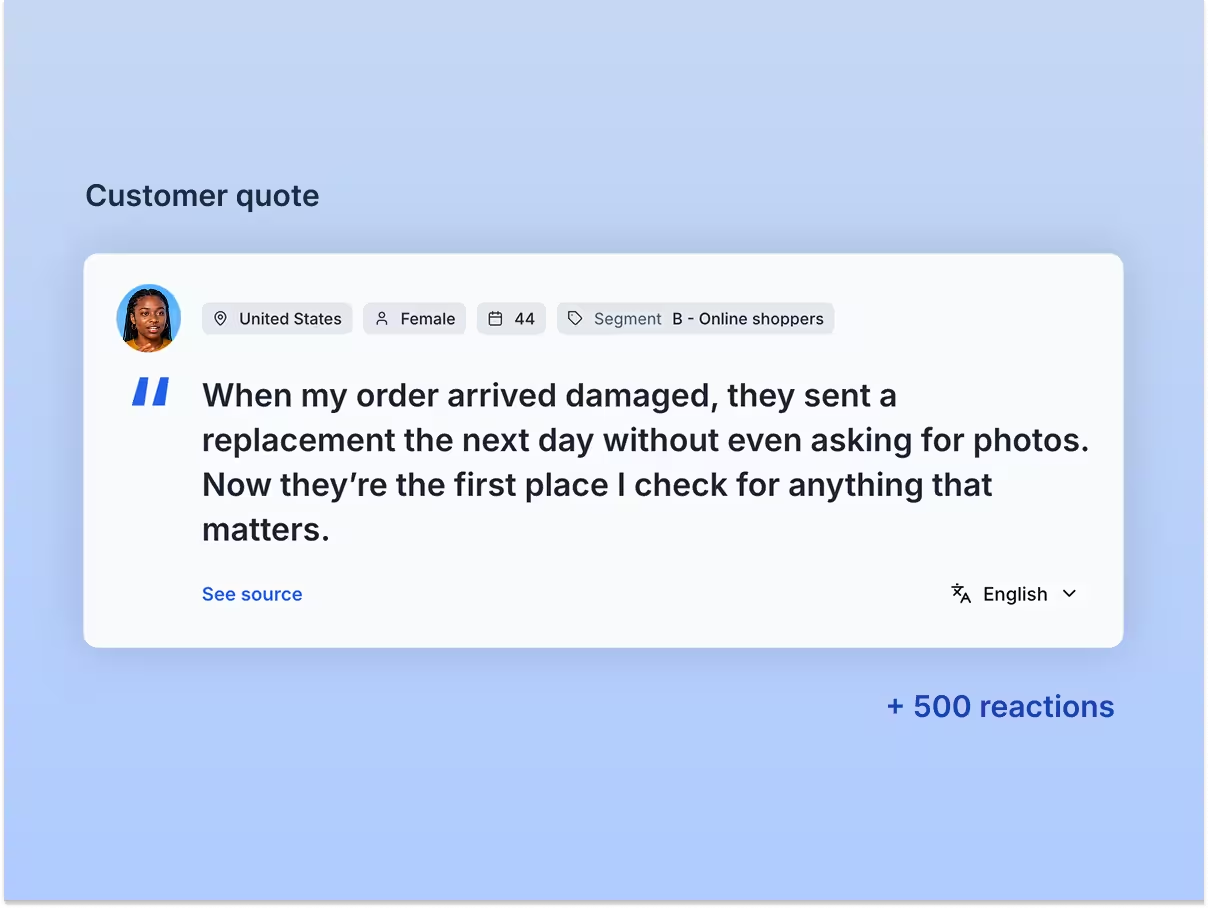
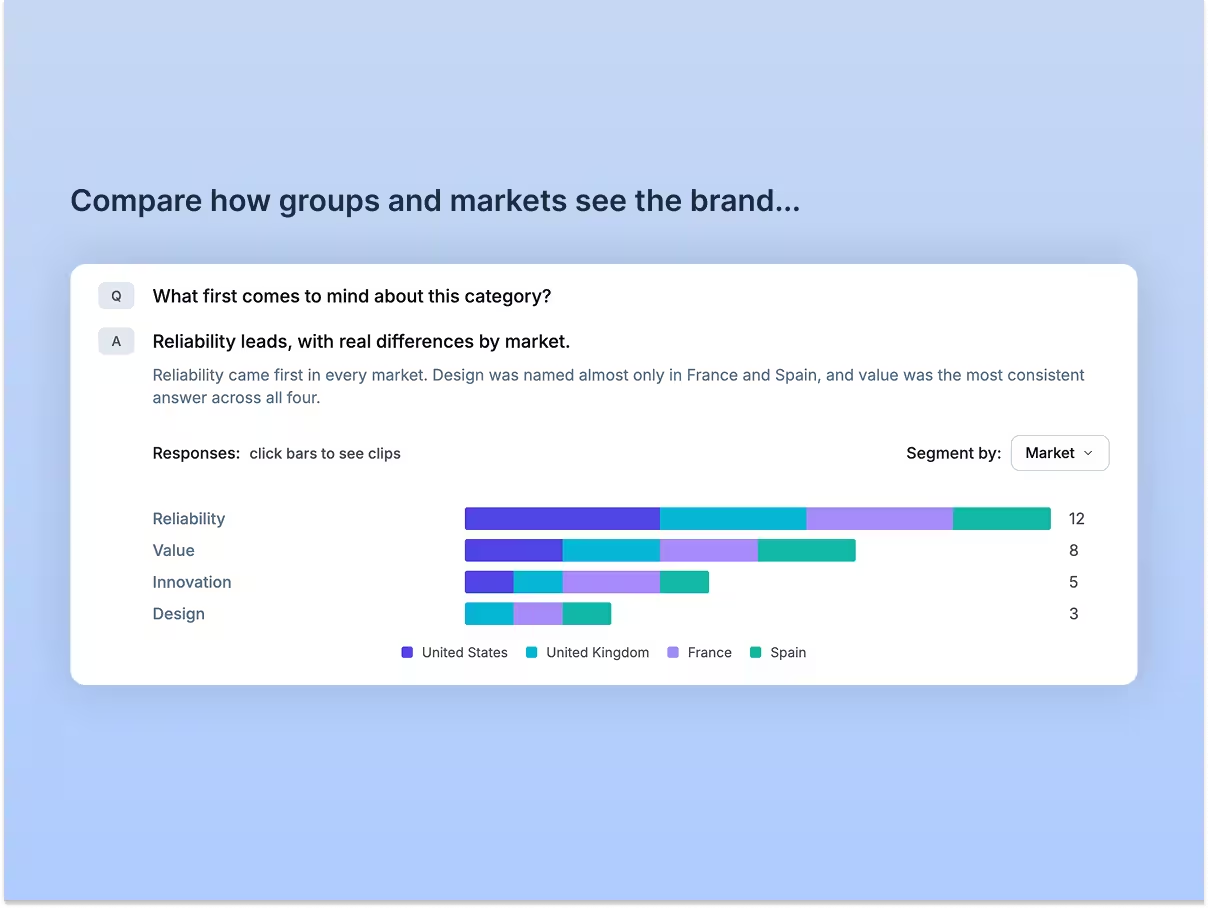
Compare how groups and markets see the brand
Interview enough people in each segment or market to compare their views.
Questions we can help answer
A Brand Perception & Positioning study answers questions like these in your customers’ own words, linking back to the moment they said it on video.




Viña Concha y Toro: exploring brand perceptions to boost wine sales
VCT Europe wanted to know if one of its key wine brands is seen as a dependable choice for every occasion. Motives ran 45-minute video interviews with 20 consumers to map the brand's strengths, gaps and place in shoppers' price tiers.
Read the case study →How it works
Brief
Tell us what you need to decide. Motives’ AI research assistant turns it into a discussion guide you can fine-tune.
Recruit
We find the right people from vetted panels in 30+ markets, or your own customer list. Every participant is video-verified.
Interview
The AI moderator interviews each participant on video, in their own language, probing on what matters.
Explore
Findings within 24 hours, each linked to the video moment behind it. Ask the Researcher follow-up questions anytime.
Choose Motives for Brand Perception & Positioning when…

People hold back in front of others
Participants find an AI less intimidating than a moderator, so there are fewer socially acceptable answers.

The study spans several markets
Multilingual interviews in parallel, with the guide and transcripts translated automatically.

Groups need comparing
Cover every segment that matters at full interview length.
Good to know
Distinctive brand asset testing, to see how recognizable and strong your logo, colors and other assets are, and projective and creative techniques that get beneath first impressions.
Often more than with a person. Participants find an AI moderator less intimidating, so you get fewer polite or socially acceptable answers.
Usually. Screening questions find people who know or buy the brand, and we check feasibility before launch. Very rare audiences can take longer to recruit.
Yes. Interviews run in each participant’s language and are analyzed together in one report.
Most studies use 20–30 people, with at least 10 per group or market you want to compare.
A study for every decision.


Not sure which study type fits your question?
Tell us what you need to decide and we’ll suggest a study design.